Table of Contents
If you’ve ever wondered why handmade products cost more, you’re not alone.
Many buyers compare handmade goods to mass-produced alternatives and see a price gap. At first glance, a handmade beaded necklace or culturally woven textile may seem more expensive than a factory-made version.
But the price difference is rooted in value, not inefficiency.
Behind every handmade product is time, skill, intention, and often a personal story. Understanding that difference helps buyers appreciate why these products are priced the way they are and why they are worth it.
Let’s explore the real reasons handcrafted items cost more and why investing in them matters.
Why Handmade Products Cost More: The True Cost of Time and Skilled Labour
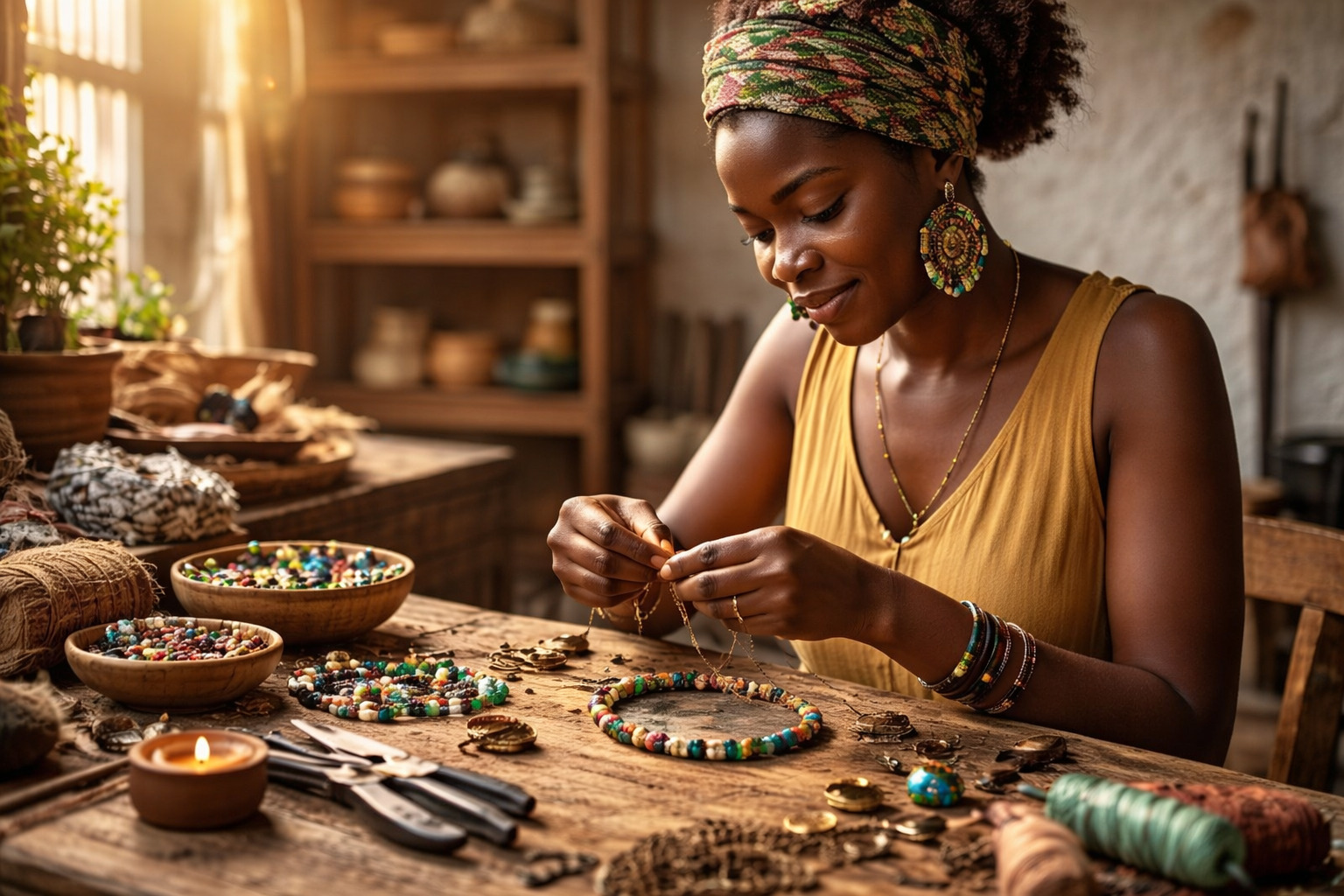
Handmade products cannot be mass-produced by machines. Each item is crafted by an artisan who has invested hours — sometimes days — in perfecting every detail.
This includes:
- Mastery of technique
- Precision in execution
- Adjustments and quality control
A machine can stamp out thousands of pieces per hour. An artisan creates one masterpiece at a time.
That time and human expertise directly influence cost and ultimately, value.
Why Small-Batch Production Is Pricier Than Mass Manufacturing
Most factory-made products benefit from economies of scale: producing large quantities dramatically reduces unit cost.
Handmade products, by contrast:
- Are often made one-by-one or in small runs
- Have limited inventory
- Don’t benefit from bulk production discounts
This scarcity enhances uniqueness and reflects in pricing.
Quality Materials Aren’t Cheap – And That’s a Good Thing
This is a key factor in understanding why handmade products cost more.
Artisans often choose materials based on:
- Durability
- Cultural authenticity
- Ethical sourcing
For example:
- Natural hand-dyed textiles cost more than synthetic factory dyes
- Sustainably sourced leather is pricier than mass, lower-grade alternatives
Better materials improve longevity, and that’s value.
Craftsmanship, Heritage, and Cultural Skill
Handmade products often carry cultural identity and historical craft knowledge.
These traditions aren’t learned overnight, they are passed down through mentorship, generations, and lived experience.
In craft, you’re not paying only for a product, you’re paying for:
- Cultural stories
- Artistic lineage
- A connection to tradition
If you’re curious how curated marketplaces support authentic handmade products, explore The Role of Marketplace Curation in Ensuring Authentic Handmade Products – an article that explains how platforms protect craft integrity.
Ethical Production Has a Price – and an Impact
Mass-produced products often rely on:
- Outsourced labor
- Lower wages
- Higher volume, faster output
Handmade marketplaces prioritize:
- Fair artisan compensation
- Sustainable and transparent practices
- Community support
When you purchase handmade, you’re choosing ethical production over cost-cutting. That’s intentional investing, not overspending.
Handmade vs Mass-Produced: What Are You Really Paying For?
Here’s a quick comparison:
| Feature | Mass-Produced | Handmade |
|---|---|---|
| Production Style | Machine/Large Runs | Artisanal/Small Runs |
| Cost per Item | Lower | Higher |
| Uniqueness | Standard | Unique |
| Materials | Often Lower Grade | High Quality |
| Cultural Meaning | Minimal | Significant |
| Human Effort | Low | High |
Both have their place. But handmade prioritizes intention, story, quality, and connection.
For a deeper dive into product value comparisons, you might also enjoy our related piece on Handmade vs. Mass-Produced: Unravelling the True Value.
Are Handmade Products Worth the Higher Price?
Many buyers ask this question.
To decide, consider whether you value:
- Longevity
- Craft uniqueness
- Emotional connection
- Ethical sourcing
- Cultural relevance
Handmade products often outlast mainstream alternatives and carry meaning beyond utility.
How to Evaluate Handmade Pricing as a Smart Buyer
If you’re unsure whether a handmade item is fairly priced, ask:
- What materials are used?
- How long did production take?
- Is this piece truly unique?
- Does the seller explain their process?
Understanding these elements helps you make confident buying decisions.
Brand storytelling also enhances buyer connection and trust. For more on how stories sell products, read Beyond Listings: How Brand Storytelling Turns Browsers Into Buyers.
Final Thoughts: Handmade Is an Investment in Craft
Understanding why handmade products cost more changes the way you view value.
You’re not simply buying an object — you’re supporting:
- Time-honored techniques
- Ethical labor
- Authentic expression
- Community livelihoods
In a world saturated with mass-produced goods, handmade creations stand apart as expressions of culture, skill, and heart.
Explore our curated collections of thoughtful, purpose-driven handmade products.
FAQs
What makes handmade products more expensive than mass-produced ones?
Handmade products require skilled labour, intentional time, small-batch production, quality materials, and often cultural craft techniques – all of which increase costs compared to machine-made mass-produced products.
Are handmade products worth the higher price?
Yes – if you value longevity, uniqueness, ethical sourcing, and cultural significance. Handmade goods often outlast cheaper alternatives and carry deeper personal meaning.
How can I tell if a handmade product is priced fairly?
Evaluate materials used, production time, uniqueness, and the story behind the craft. Sellers who articulate these factors transparently typically price fairly.
Do handmade products last longer than mass-produced ones?
Often, yes. Quality materials and attentive craftsmanship contribute to increased durability and long-term value.
Why should I buy handmade instead of factory-made items?
Buying handmade supports artisan livelihoods, encourages ethical production, preserves cultural heritage, and connects you to meaningful stories behind each product.

- How to Sell Products on WhatsApp in Nigeria: Create Your Catalogue and Turn Chats Into Sales – October 5, 2026
- Where to Find Nigerian Handmade Products Online – October 1, 2026
- How to Create an Online Store in Nigeria Without Spending a Fortune – September 29, 2026
Leave a Reply